
Historic District

Where History Lives
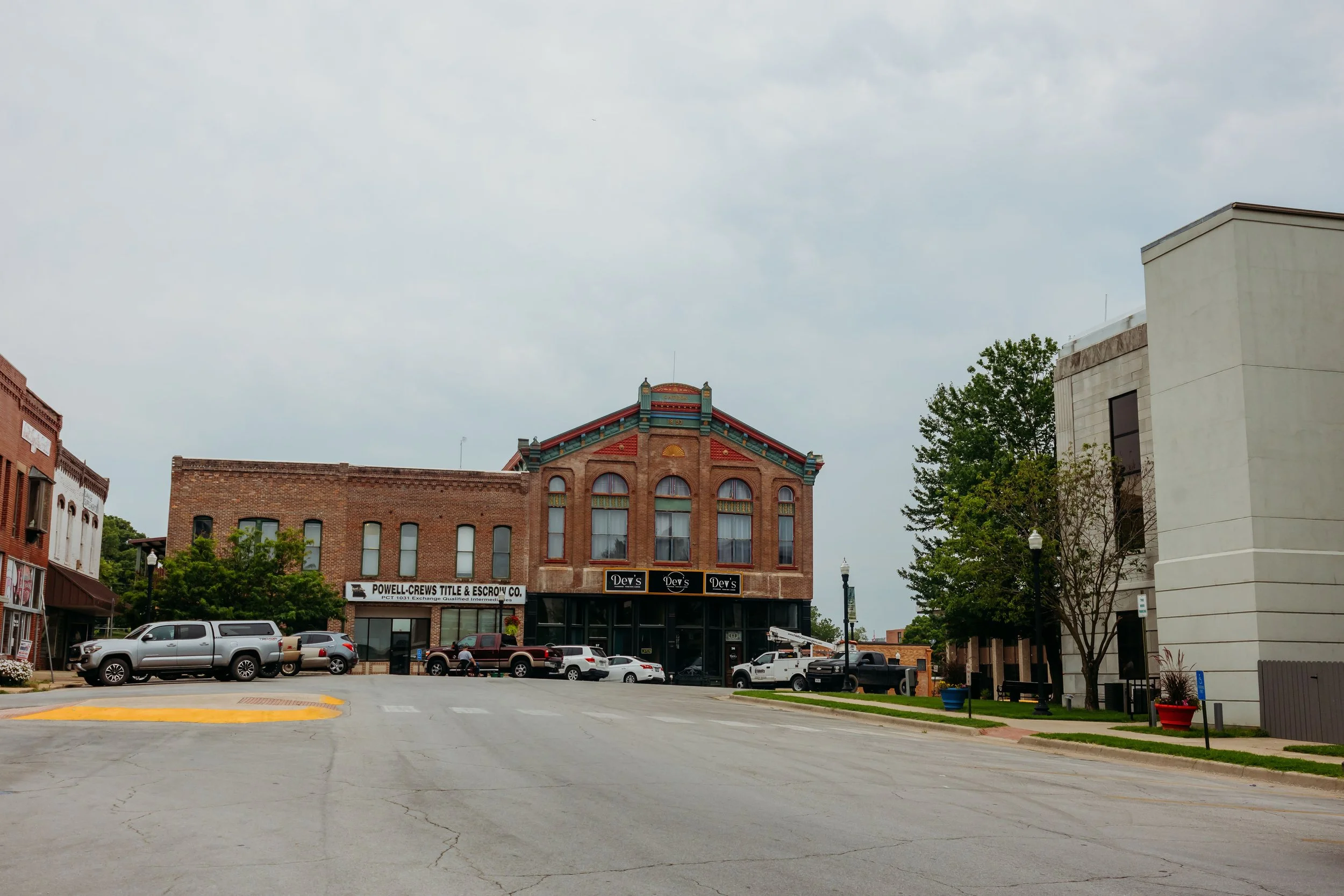
Designated by the National Register of Historic Places, the West Plains Downtown Historic District is the historic and cultural heart of West Plains, Missouri. Encompassing 46 contributing buildings within the city’s central business district, the district reflects more than a hundred fifty years of architectural, economic, and community development—from the city’s early commercial growth in the late 19th century through the current century.
A District Shaped by Time
Developed between circa 1881 and 1965, the West Plains Downtown Historic District tells the story of a community shaped by commerce, civic investment, and regional influence. As West Plains emerged as a hub for trade, banking, entertainment, and government in south‑central Missouri, its downtown buildings evolved to reflect national architectural trends while meeting local needs.
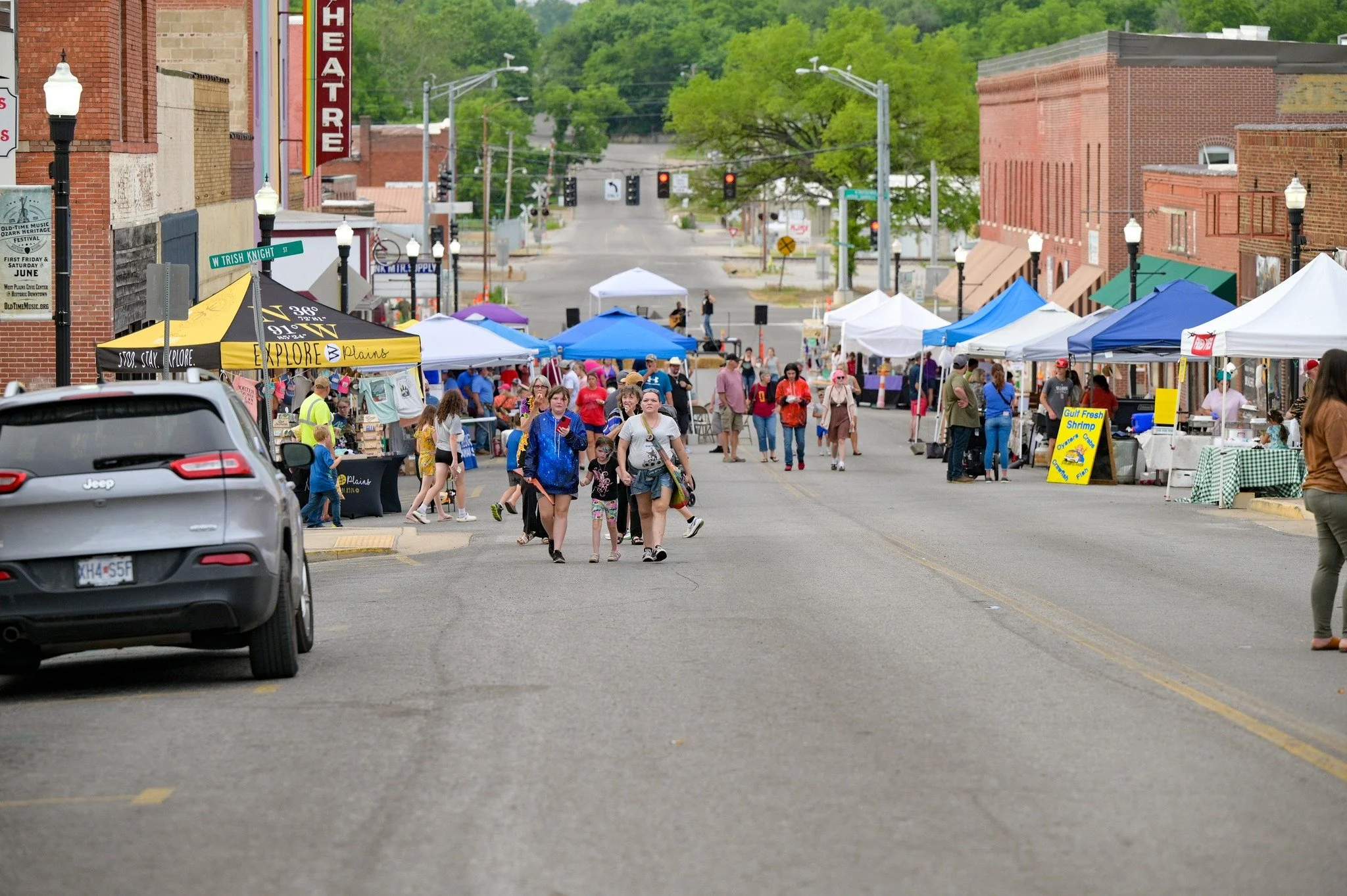
Today, the district remains a vibrant collection of historic structures that continue to support businesses, public institutions, and community life.
Architectural Significance
The district features a diverse and visually striking mix of architectural styles, including:
Italianate – Known for decorative cornices and tall, narrow windows
Queen Anne – Featuring asymmetrical facades and ornamental detailing
Romanesque Revival – Characterized by rounded arches and substantial masonry
Late Gothic Revival – Noted for vertical emphasis and pointed architectural elements
Art Deco – Reflecting early 20th‑century modern design and geometric forms
Together, these styles create a rich streetscape that illustrates changing tastes, technologies, and ambitions across generations.
Landmark Buildings
Several buildings within the district are individually recognized for their historic importance, including:
Elledge Arcade Buildings
W. J. and Ed Smith Building
West Plains Bank Building
Other notable and contributing structures include:
IOOF Building #2 (c. 1923)
First Presbyterian Church (c. 1887, 1910, 1978)
Howell County Courthouse (1937)
Aid Hardware Building (1914–1915)
W. N. Evans Building (c. 1892)
J. R. Foster Building (c. 1929)
Foster‑Renfrew Building (c. 1919)
Alsup, Risley & Skillman Block (c. 1887)
Catron Opera House / Johnson Opera House (1893)
IOOF Building / J. R. Galloway Building (1896)
Evans Theatre (c. 1899, 1913)
W. J. Zorn Building / Howell County Gazette Building (1911–1912)
West Plains Fire Department / City Hall (1917)
Avenue Theatre (1950)
Each building contributes to the district’s collective story of entrepreneurship, civic pride, and community gathering.